
Pacifica Transaction Tutorial: Weekly 10 Million Point Reward, How Beginners Can Seize Early Bird Bonus

The rise of Perp DEX is unstoppable. Following Hyperliquid's lead in seizing the market, a group of emerging decentralized exchanges have also begun to make their mark. This year, Aster, backed by CZ and Yzi Labs, went live and started a trading competition, with its trading volume surpassing Hyperliquid at one point. Equally noteworthy is Pacifica, founded in January by three founders including former FTX COO Constance Wang—the project has made rapid progress, launching its testnet in just two months and officially mainnet on June 10th.
Currently, Pacifica has 30,000 active users, with a seven-day trading volume reaching as high as 59 billion USD. While Pacifica has developed rapidly, there is still significant room for growth in trading volume compared to current leaders like Lighter and Hyperliquid. Furthermore, since October 30th, the platform's standard points issuance has increased twentyfold, with the current total supply of points exceeding 135 million. For Pacifica, which has not yet issued coins, the attractiveness of the points activity to users is self-evident.
This article has compiled a registration and trading tutorial for Pacifica. The points activity was launched less than six months ago and is still in its early stages. If you also wish to participate in this points feast, please continue reading below.
1. Open the Pacifica website and complete registration and wallet linking
Pacifica Website: https://app.pacifica.fi/ 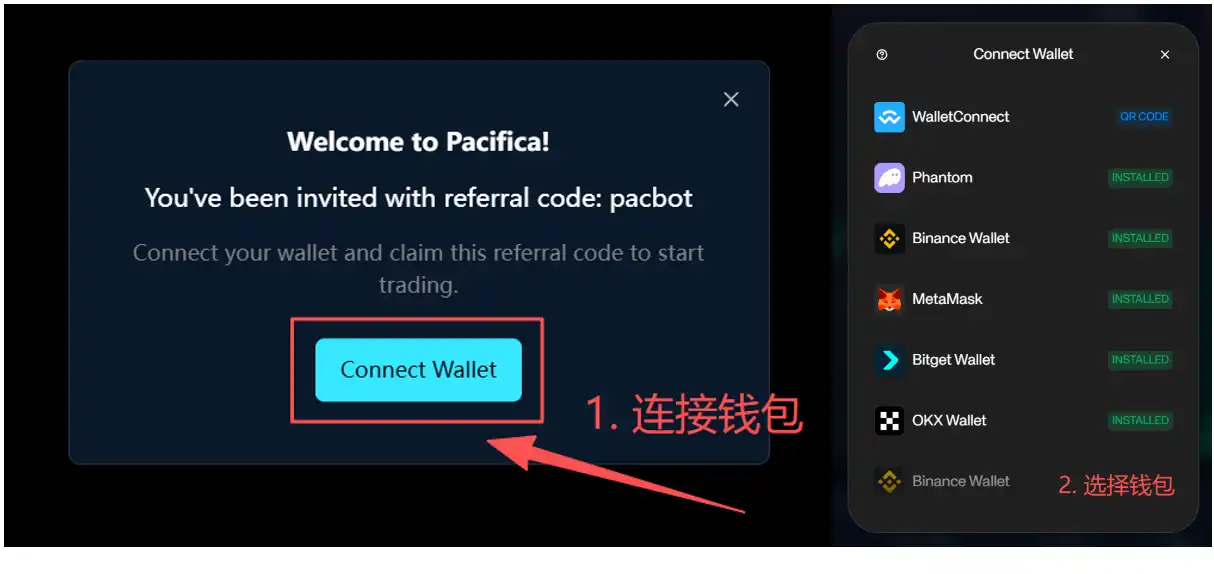
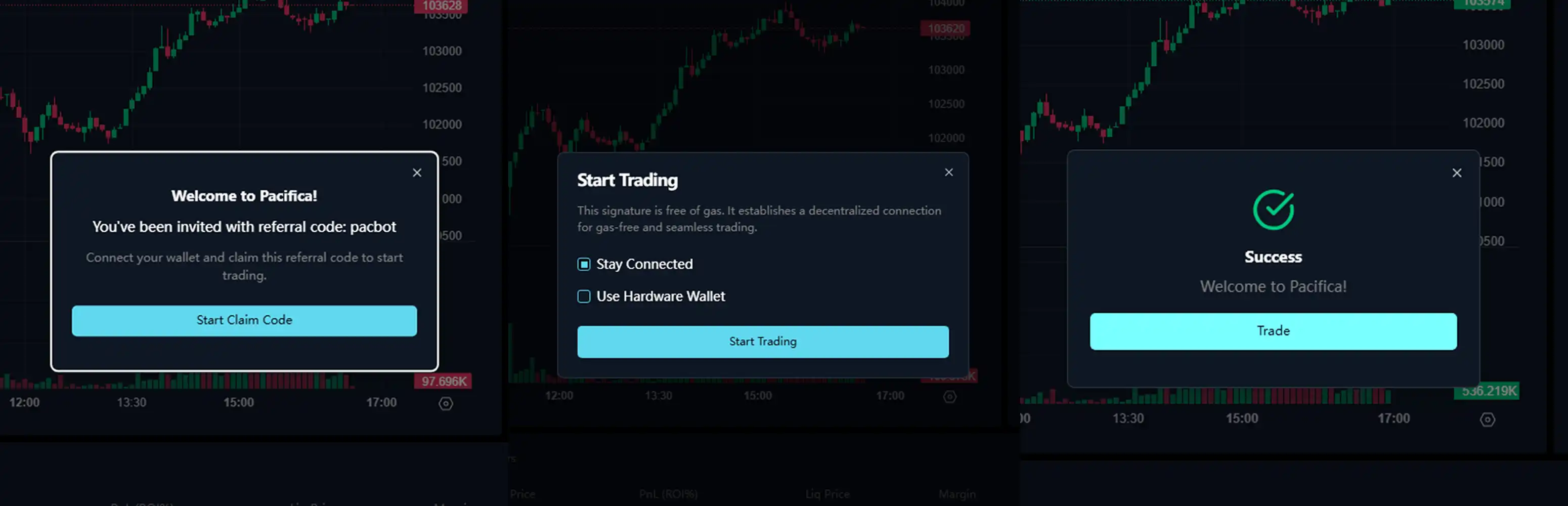
After linking your wallet, there will be 2-3 confirmations, follow the prompts to confirm.
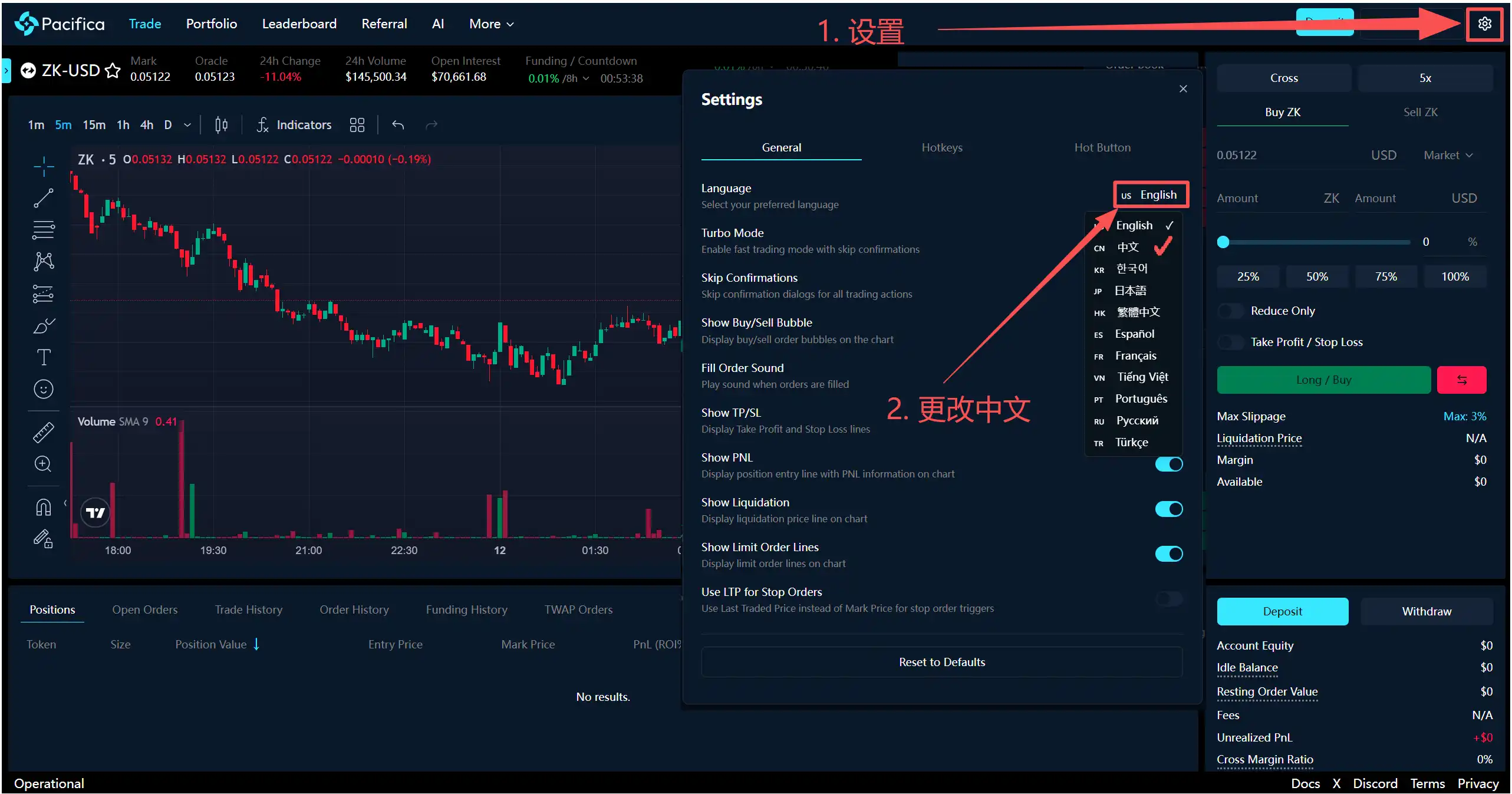
2. Set Language
The website currently supports multiple languages. If you are a Chinese user, click on "Chinese" or "Traditional Chinese"
If you prefer an English page, you can skip this step.
3. Deposit USDC and Select the Currency for Trading
Pacifica is built on Solana, so when depositing funds, you need to choose Solana's USDC on-chain and double-check the wallet address for on-chain transfers.
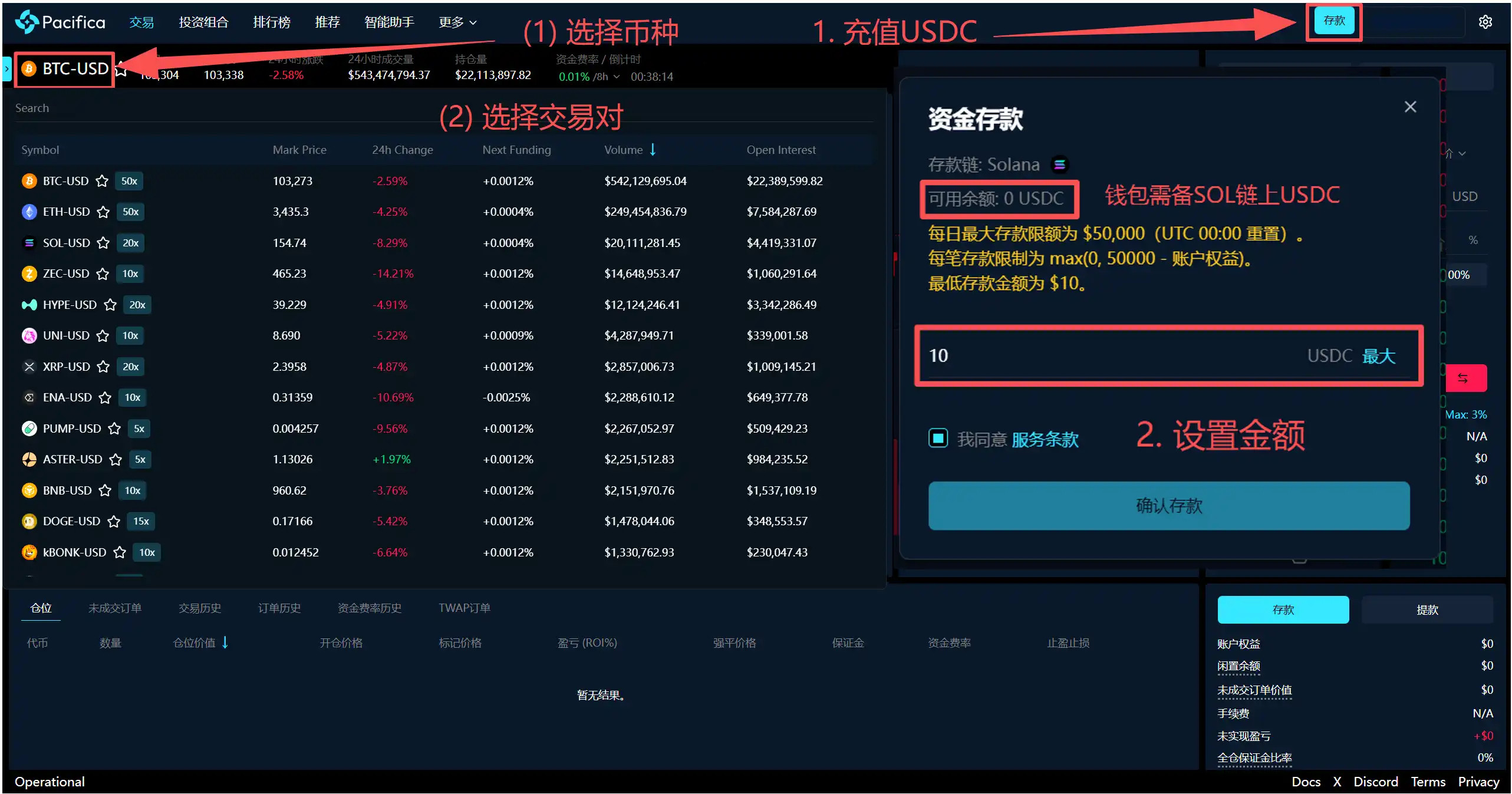
4. Initiate Your First Trade (Using BTC as an Example)
After completing the deposit, you can choose the cryptocurrency you want to trade in the top left corner. Currently, Pacifica supports most mainstream tokens and is continuously listing new tokens.
Based on the example in the image:
- Set the leverage multiplier (beginners are advised to use low leverage, avoid high leverage)
- Trading direction: Long/Short
- Opening amount/Market order
- Quantity of the trading asset
- Click "Confirm" to place the order
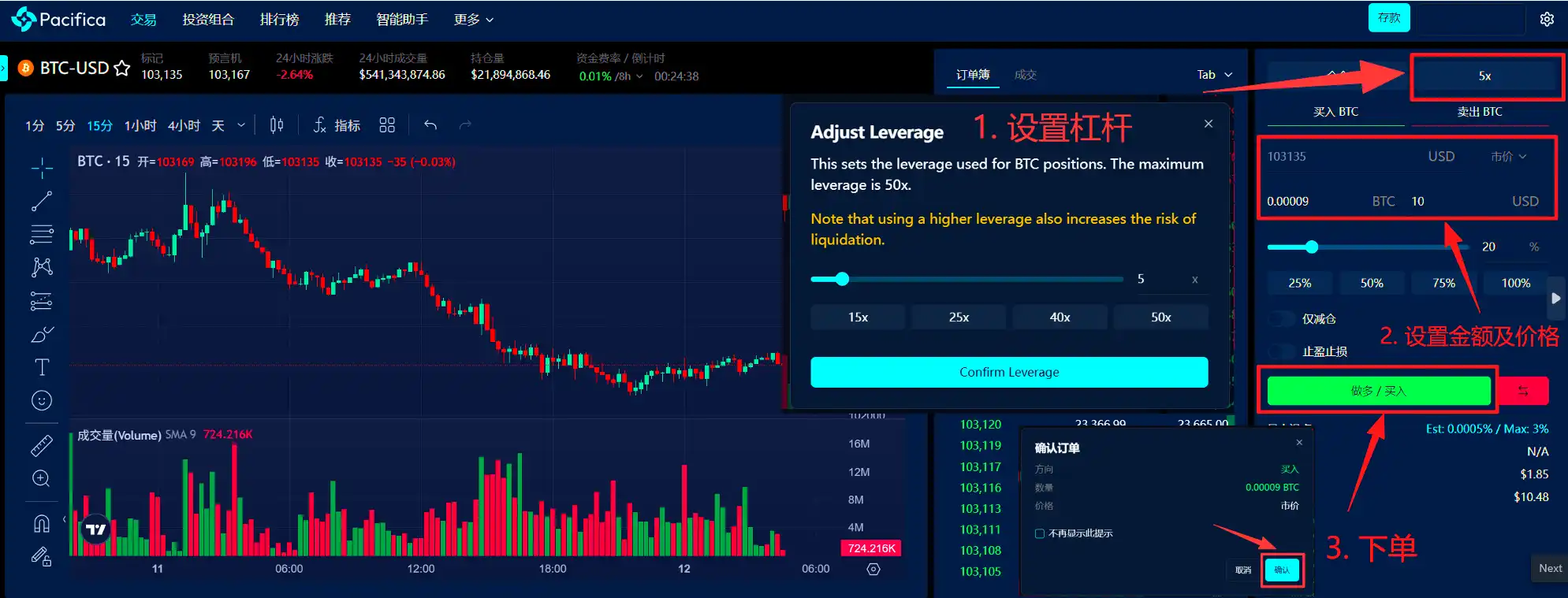
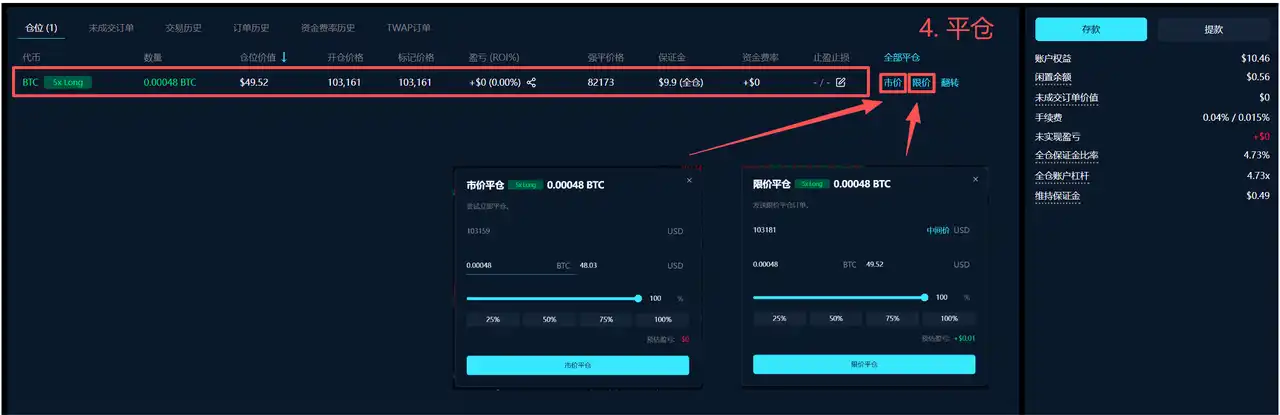
5. After placing an order, if you want to close the position or set a limit order to close, please refer to the following steps.
Finally, a reminder to everyone, this tutorial is designed to earn points through multiple means, contract trading can be addictive, so resist FOMO.
Pacifica's points program will launch on September 4, 2025, with a weekly snapshot every Thursday at 00:00 UTC. Distribution will be completed within 24 hours and will be allocated to eligible active users. The specific distribution formula is not yet public, mostly based on the total platform trading volume. Currently, 10,000,000 points are distributed weekly to trading users (previously 500,000 points, increased 20 times on October 30), distributed based on the total number of users and trading volume for the week, making point acquisition dynamic.
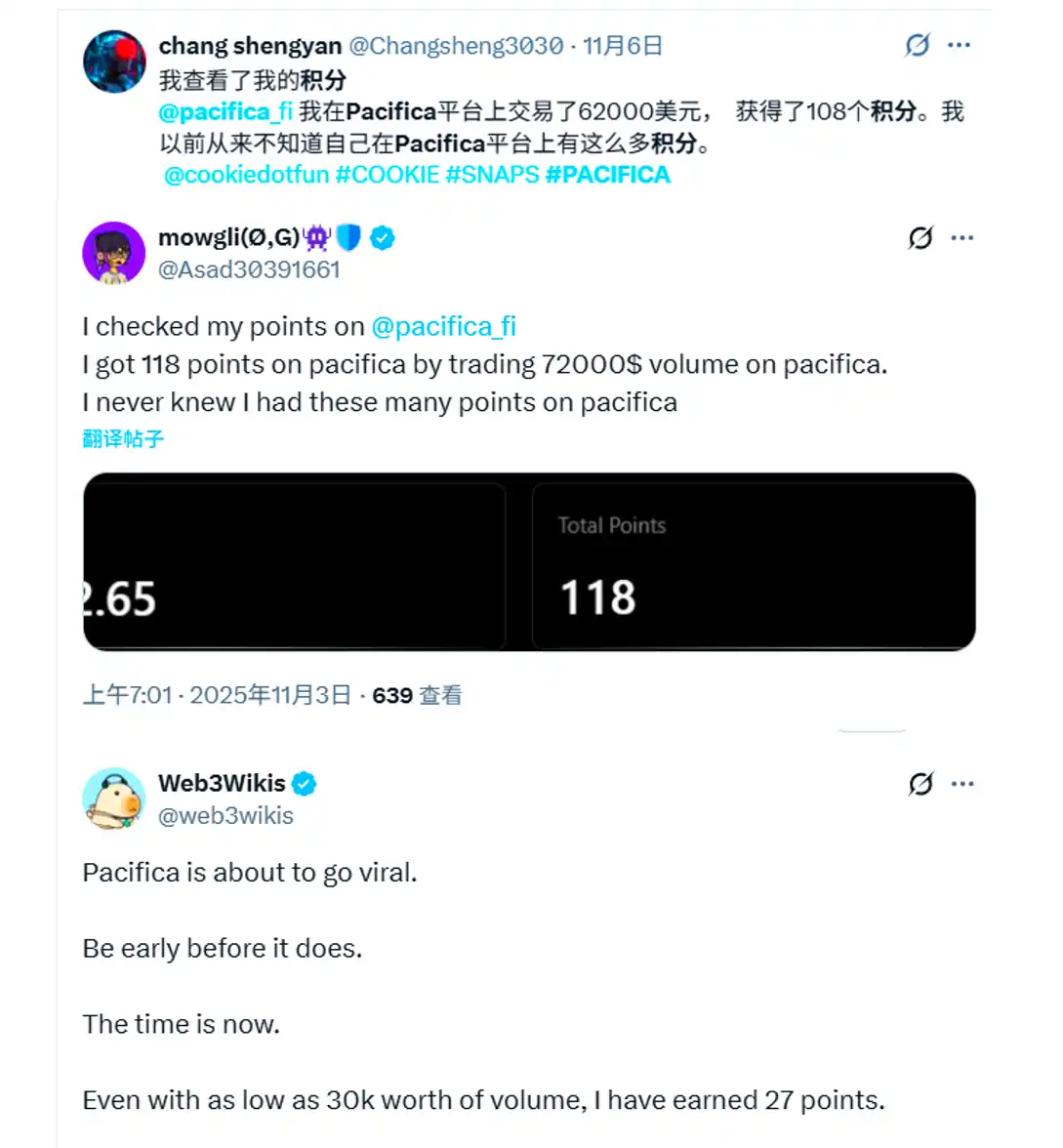
Based on data feedback from multiple traders online from November to the present month, an average trading volume of approximately $600 to $1000 can earn 1 point. Similarly, to reduce wear and tear, in terms of trading pairs, you can choose some low-volatility coins with low funding rates.
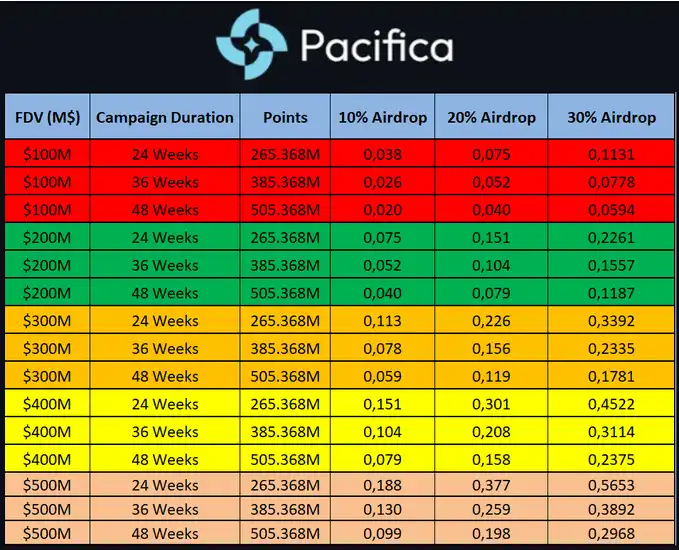
It is important to note that associating Pacifica points with token value is still a community speculation based on industry experience, and no official rules have been provided. However, based on the usual practices of past projects and community speculations, the community generally associates points with tokens. Under this speculative premise, the community has derived a widely circulated valuation logic, with the core formula being: Individual point price = (Fully Diluted Valuation FDV of the project × Token Airdrop Ratio) / Total Points Issued in the Point Program.
Application of this formula relies on several core variables: firstly, an estimate of the project's FDV; secondly, an assumption about the airdrop's proportion of total supply; and thirdly, the most variable factor—an estimate of the total period for point issuance (usually assumed to be 24, 36, or 48 months). The table below will show different scenarios of point price estimation based on these variables for reference:
You may also like

Why Is PAXG Price Different From Gold? 5 Reasons Crypto Traders Should Know

The cryptocurrency industry has entered the "Show Me" era: merely relying on vision is no longer enough

WEEX OpenAPI 101: 5 Powerful Modules, AI Trading Tools, and Grab Up to 70% Revenue Opportunities
Learn how WEEX OpenAPI connects traders, developers, AI agents, and trading platforms. Discover WEEX API features, Binance-compatible integration, automated trading workflows, revenue opportunities, and ecosystem possibilities.

Morning News | The draft amendment to the People's Bank of China Law aims to clarify the legal status of digital renminbi; South Korea will transfer about 40 unregistered virtual asset service providers to law enforcement agencies

Interpreting the Ethereum Foundation's new structure: Reaffirming self-sovereignty amid institutional trends

Interview with NDV Founder Jason Huang: Popping the AI Bubble and the Myth of Microstrategy, Seeking the Ultimate Ace in the Crypto Market
Morning Report | Former Ethereum Foundation researcher establishes Ethlabs; EU Parliament Economic Committee passes digital euro regulatory proposal

Dragonfly partner Haseeb: The fastest-growing companies in the future may all be stuck at 149 people

How xBubble Breaks the Deadlock in VC's Heavy Investment in the OPC Economy

The encrypted unicorn Blockstream is deeply embroiled in a serious fraud case

Morning Report | The South Korean Financial Services Commission plans to expand the regulatory sandbox to include virtual assets; the parent company of the New York Stock Exchange, ICE, has reached a partnership with OKX to jointly establish a cryptocu...

Exclusive Interview with Strategy CEO: Putting Aside the Sale of 32 BTC, the 60 Trillion AI Intelligence is the Ultimate Fate of Bitcoin

TRON revitalizes the image of the bull, creating a more approachable brand character

Will the STRC issuance price discussed with ChatGPT really fall into a death spiral?

The foundation retreats, Ethlabs steps forward: Ethereum welcomes its largest restructuring in history

NYSE Parent ICE and OKX Launch Joint Venture: What It Means for Tokenized Stocks
ICE and OKX have announced a joint venture focused on tokenized stocks, but stock futures are already live across crypto markets. Here's what the partnership means, how stock futures work, and why traders are paying attention.

How to Trade Apple and Nvidia on a Crypto Exchange in 2026 (Without Buying Shares)
Morning Report | Secret Network loses $4.67 million due to cross-chain vulnerability; Michael Saylor releases Bitcoin Tracker information again, may disclose increased holdings data next week
Why Is PAXG Price Different From Gold? 5 Reasons Crypto Traders Should Know
The cryptocurrency industry has entered the "Show Me" era: merely relying on vision is no longer enough
WEEX OpenAPI 101: 5 Powerful Modules, AI Trading Tools, and Grab Up to 70% Revenue Opportunities
Learn how WEEX OpenAPI connects traders, developers, AI agents, and trading platforms. Discover WEEX API features, Binance-compatible integration, automated trading workflows, revenue opportunities, and ecosystem possibilities.
Morning News | The draft amendment to the People's Bank of China Law aims to clarify the legal status of digital renminbi; South Korea will transfer about 40 unregistered virtual asset service providers to law enforcement agencies
Interpreting the Ethereum Foundation's new structure: Reaffirming self-sovereignty amid institutional trends
Interview with NDV Founder Jason Huang: Popping the AI Bubble and the Myth of Microstrategy, Seeking the Ultimate Ace in the Crypto Market


